Our work
Predator free, one trap line at a time.
Our aim is to rid the Mahurangi West peninsula of pest animals. We target possums, mustelids and rodents, in line with Pest Free Auckland, and clear the weeds that smother native bush.
The three we’re after
Why these predators have to go.
Mustelids
Stoats · ferrets · weasels
Predators of native birds, eggs, lizards and insects. Weasels will take prey much larger than themselves, and nesting birds are easy targets.
Possums
Brought from Australia in the 1800s
At high numbers their browsing strips the canopy and understorey. They also compete with and eat native wildlife, which never evolved defences against them.
Rats
Ship rats · Norway rats · kiore
Omnivores that eat birds, eggs, chicks, seeds, snails, lizards, wētā, fruit and flowers. They’re partly responsible for the decline of many native species.
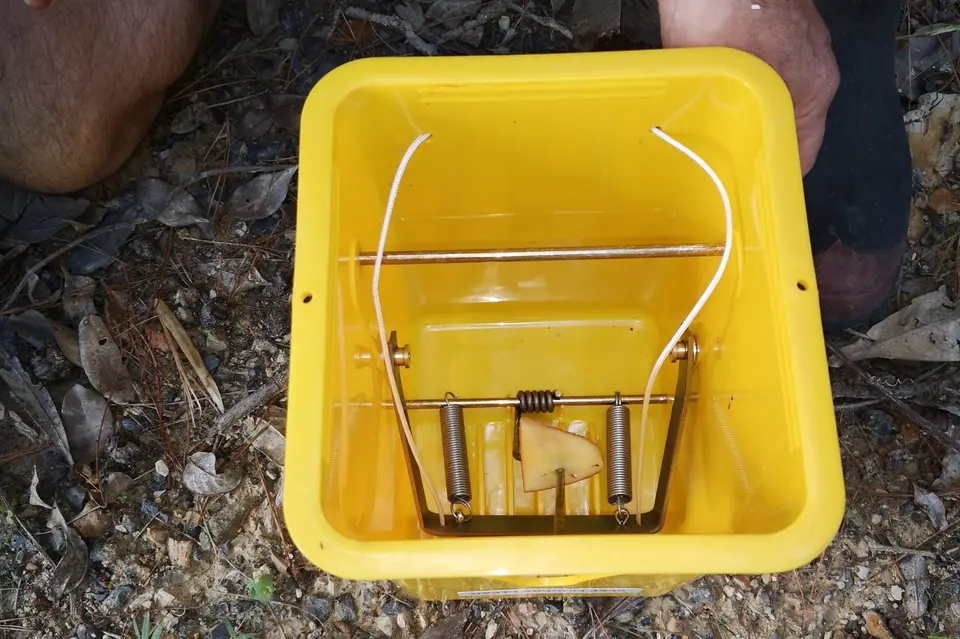
Humane traps
Checked, reset and re-baited by volunteers.
- Timmsfor possums
A bite-sized piece of apple on the movable bar inside.
- Victorfor rats
Two types of rodent trap are used across the hubs.
- DOC200for stoats, ferrets and weasels
The Department of Conservation’s humane kill trap.
Every catch goes into Trap.NZ
We log trap locations, what was caught and which bait was used. Our data joins thousands of other community projects, building a picture of how Aotearoa is tracking towards Predator Free 2050.
Visit Trap.NZCoverage
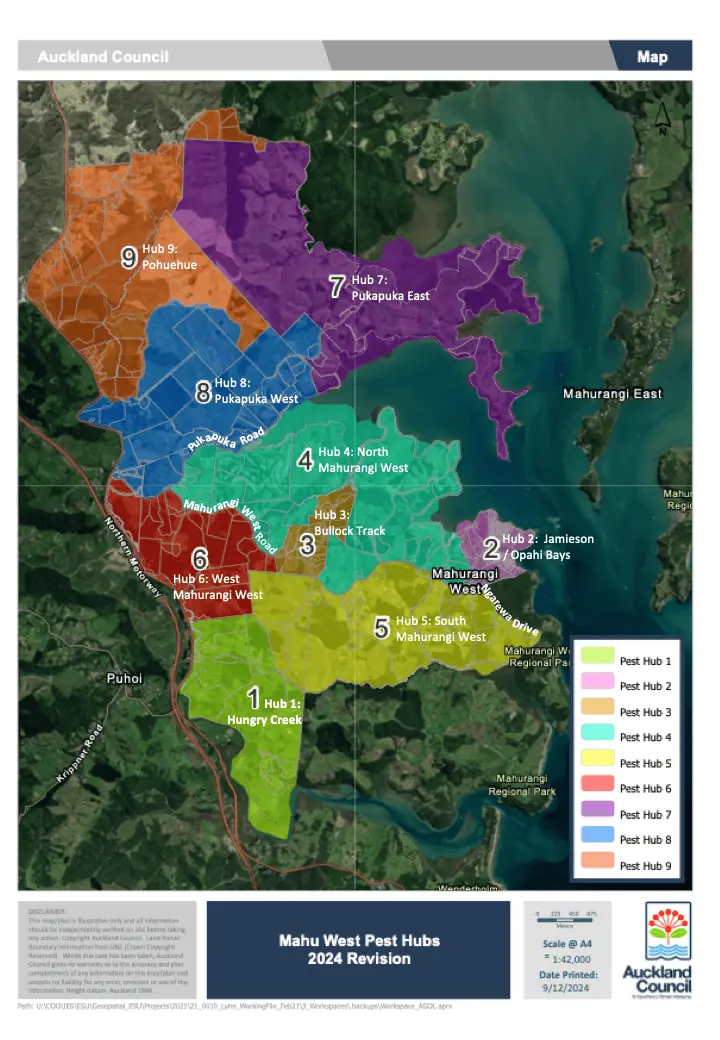
Nine hubs, 3,500 hectares.
With help from Auckland Council’s biodiversity team we split the peninsula into nine hubs. Each has its own volunteers and landowners, looked after by a hub coordinator. Over 80 trapping volunteers work across them.
- 1Ian C
- 2Jeff M (Jamieson) · Lyn L (Opahi)
- 3Hugh K
- 4Mike N
- 5Coordinator wanted. Could it be you?
- 6Hugh K
- 7Steph H
- 8Coordinator wanted. Could it be you?
- 9Mick C
Monitoring
Counting birds tells us if it’s working.
Any group doing pest control needs a benchmark of its birdlife, then regular counts to see whether trapping is making a difference.
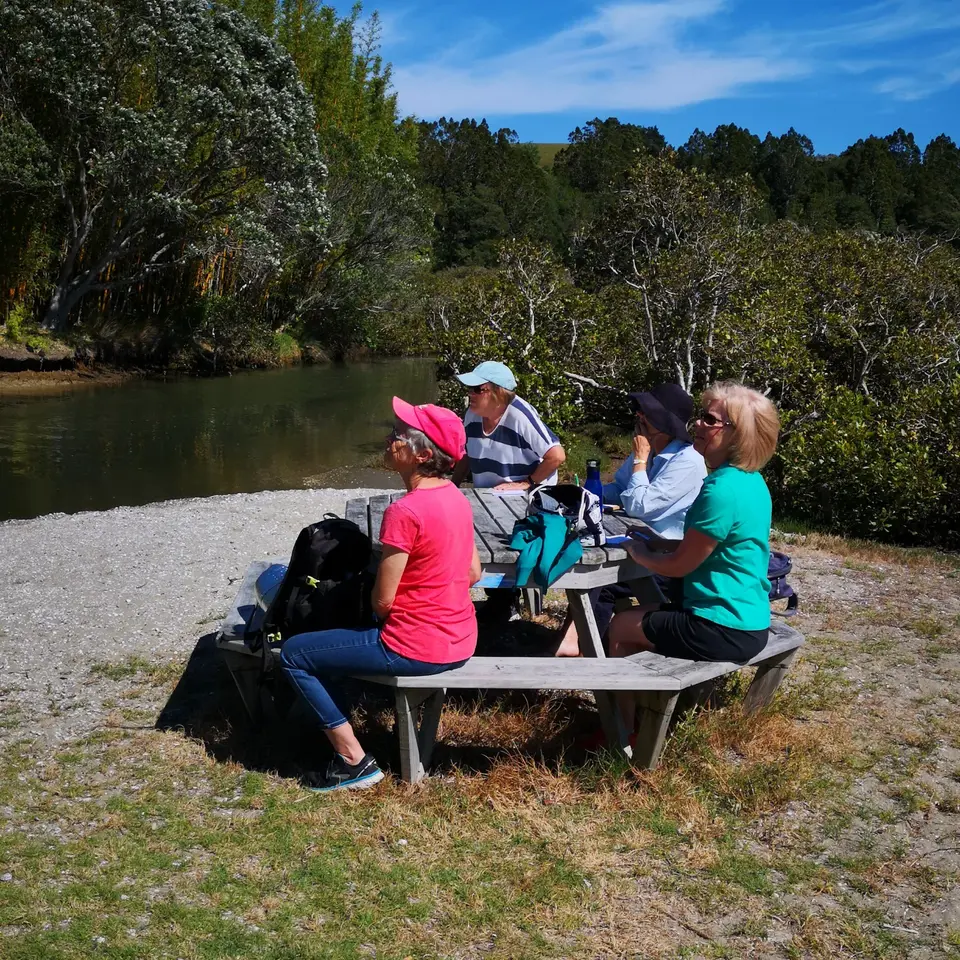
Our counters were trained in December 2020 by Ngaire Wallen of the Takatu Landcare Group. Each season, around 20 volunteers spend half an hour at each of our 20 stations, recording every bird seen or heard.
Since autumn 2022 the counts have gone into Trap.NZ, and onto eBird, run by the Cornell Lab of Ornithology, which also feeds the New Zealand Bird Atlas.
New in 2026
Coast Guardians
Our first project under a three-year partnership with Auckland Council. Volunteers adopt a stretch of the Mahurangi West coastline and monitor it through the breeding season.
- Record kororā (little blue penguins), nesting shorebirds and other coastal wildlife
- Note threats like predator activity and human disturbance
- Training with Auckland Council community ranger Jared Anderson
Pest plants
The Buffer Zone programme.
A park buffer zone is the 500 metres around a park with special ecological values. Properties around Mahurangi Regional Park are in one.
Auckland Council controls pest plants inside the park, and they need controlling on the land around it too. Council does the first round on climbing and bushy asparagus; landowners follow up, and deal with woolly nightshade, moth plant and wild ginger themselves. We can help with advice and hands.
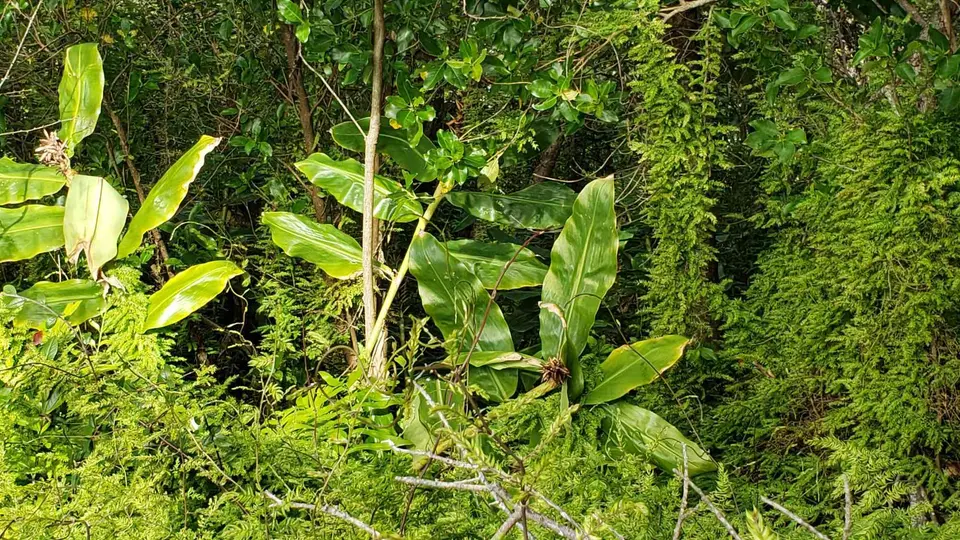
Wild ginger and climbing asparagus. Photo: Allison Milne